Quick Nav
- Abstract: Archival Overview of PROSEA
- Methodology: Archival Review and Categorization
- Institutional Evolution of the Foundation
- Botanical Research and Field Activities
- Transition to Digital Plant Databases
- Regional Capacity Building and Networking
- Limitations of the Historical Archival Record
- Conclusion: Modern Applications of Historical Data
Abstract: Archival Overview of PROSEA
The Plant Resources of South-East Asia (PROSEA) network occupies an unusual place in the documentary history of regional botany. It was never simply a publishing project. It was an institutional experiment in coordinating taxonomists, agronomists, and ethnobotanists across national borders, and much of what we know about how that experiment unfolded survives in an unglamorous source: the newsletters.
Those newsletters function here as primary documentary evidence. They recorded funding decisions, fieldwork itineraries, staffing changes, and editorial debates in something close to real time, before institutional memory had been smoothed into official narrative.
This paper synthesizes decades of that archival material to trace the evolution of economic botany across South-East Asia. Scope decisions prioritized primary newsletter sources over later retrospectives, on the reasoning that contemporaneous reporting, however partial, preserves detail that summary documents tend to discard.
Methodology: Archival Review and Categorization
Retrieval began with physical archives. Bound and loose newsletter editions were located first, then cross-checked against digitized copies where those existed. An early temptation was to lean on institutional summaries alone, which would have been faster; that approach was set aside because the summaries flattened precisely the operational texture this study set out to examine.
The cataloged corpus runs from 1987 onward. Each retrieved edition was logged by date, originating office, and documented activity type.
Categorization framework
Documented activities were sorted into four working categories:
- Institutional growth — foundation milestones, funding, and partnership announcements.
- Field research, taxonomic revisions, surveys, and collection expeditions.
- Database development, print-to-digital planning and data standardization.
- Capacity building, training, workshops, and country-office operations.
Verification criteria
Historical claims drawn from the newsletters were verified, where possible, against secondary botanical literature and institutional reports. A claim was treated as corroborated when at least one independent source confirmed it. Claims that appeared only in a single newsletter mention are flagged as such throughout, rather than presented as settled fact.
Key Findings: Institutional Evolution of the Foundation
The chronological mapping reveals a foundation that grew by accretion rather than by single decree. Early editions describe a coordinating structure anchored in European institutions, with the scientific labor distributed across collaborating South-East Asian bodies.
International partnerships appear prominently in the 1992 editions, where funding relationships and collaborating agencies are named alongside specific volume commitments. This is the period in which the network's financial scaffolding becomes legible in the record.
What follows is the more consequential shift. Over successive editions the coordinating gravity moves outward, away from a single European hub and toward a decentralized network of South-East Asian institutions. The newsletters track this transition through changes in editorial bylines, office addresses, and the geographic origin of reported activities.
The decentralization was not merely administrative relocation. It marked a deliberate transfer of scientific authority to the institutions that would steward the work after external coordination wound down.
Key Findings: Botanical Research and Field Activities
The field record is where the newsletters earn their value as primary sources. Across editions, the network reported major taxonomic revisions and ethnobotanical surveys with a level of operational detail rarely preserved elsewhere.
Cross-border agricultural assessments recur throughout. Germplasm collection expeditions were coordinated across national boundaries, and the newsletters logged routes, target taxa, and the institutions hosting each effort.
Standardization and peer review
The multi-volume PROSEA handbook series demanded consistency that field reporting alone could not supply. Editions document the standardization of species descriptions and the peer-review process that governed handbook entries.
That editorial discipline mattered. A handbook synthesizing economic uses across dozens of contributing authors needs a shared descriptive template, or it fractures into incompatible regional conventions. The newsletters show the editorial committees working precisely this problem, edition by edition.
Key Findings: Transition to Digital Plant Databases
The print-to-digital question surfaces explicitly in the 1998 issues. Here the network begins discussing the conceptualization of a centralized digital database, moving beyond the newsletter-and-handbook model that had defined its first decade.
The technical challenges were substantial. Economic botany data resists tidy electronic structuring: a single species may carry dozens of documented uses, vernacular names across multiple languages, and overlapping taxonomic synonyms. Standardizing that for electronic retrieval is not a clerical task.
The newsletters frame digitization as an extension of the handbook's standardization logic rather than a break from it. The descriptive templates already developed for print became the scaffolding for electronic records, which later eased integration with emerging global biodiversity data standards.
One open question remains. The newsletters document the intent and early planning of the digital transition clearly enough, but they record less about implementation outcomes — whether the conceptual database matched what was eventually built is a question the archival record does not fully answer.
Key Findings: Regional Capacity Building and Networking
Country offices form the operational backbone of the decentralized network, and the newsletters trace their establishment and running history. Offices in Indonesia, Malaysia, the Philippines, and Thailand appear with recurring reports of local activity.
Training and exchange
Beyond administration, these offices ran training programs, taxonomic workshops, and scientific exchange initiatives. The newsletters list workshop schedules, participating institutions, and the taxonomic groups addressed.
There is a subtler function worth naming. For researchers working in relative isolation across the region, the newsletter itself was connective tissue — it told them who was working on what, where, and how to reach them. A botanist revising a genus in one country could learn of a parallel effort in another simply by reading the latest edition.
That networking role is easy to underestimate from a present-day vantage point, when communication is instant. In the period the archive covers, the newsletter was often the most reliable channel through which a dispersed scientific community recognized itself as one.
Limitations of the Historical Archival Record
The archive is incomplete, and honest use of it requires saying so plainly. Temporal gaps appear in the physical holdings during 1995 to 1997, where editions are missing or could not be located. Any chronology spanning that window carries an acknowledged discontinuity.
There is also a reporting bias built into the source. Newsletters were partly promotional instruments, which means successful institutional milestones tend to be documented more fully than field-level methodological failures. The record over-represents what worked.
A further difficulty is verification. Incomplete digitization has left some early field notes overlooked, and verifying un-digitized field data against modern taxonomic classifications is not always possible. Variations in reporting standards across countries compound this — what one office logged in detail, another summarized, making direct comparison uneven.
These constraints do not invalidate the findings. They bound them. Conclusions drawn here describe what the surviving record documents, not the totality of what the network did. Readers should treat the historical baseline as a well-attested floor rather than a complete account.
Conclusion: Modern Applications of Historical Data
The PROSEA network's imprint on South-East Asian agricultural and botanical research has outlasted its most active operational years. The taxonomic frameworks, the handbook conventions, and the regional institutional habits it cultivated continue to shape how economic plants in the region are documented.
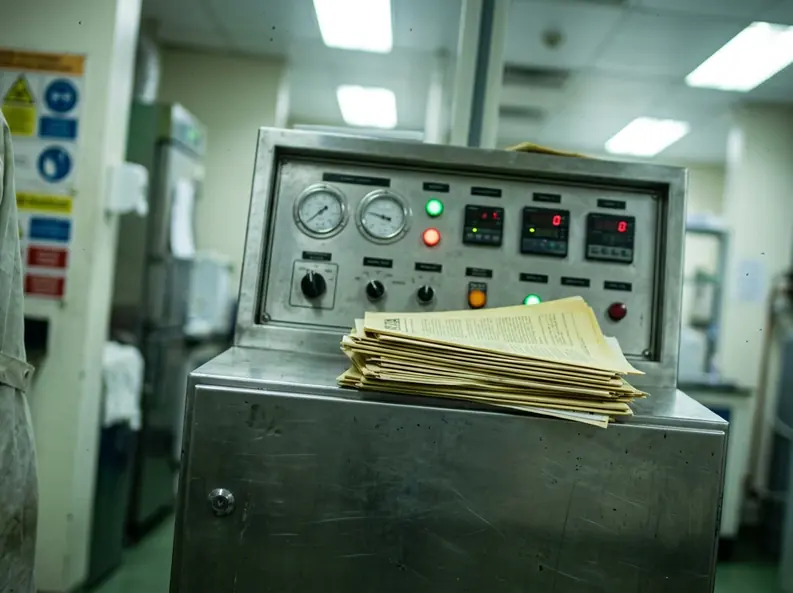
For contemporary conservationists and ethnobotanists, the historical record offers something hard to reconstruct otherwise: a documented baseline. Knowing which uses were recorded, which populations were surveyed, and where collection expeditions traveled decades ago gives present-day work a reference point against which to measure change.
The clearest recommendation that follows is preservation. The remaining archival materials warrant complete digitization and open-access stewardship, with the 1995–1997 gaps treated as a retrieval priority. The interpretive cautions above apply to economic-botany reporting specifically — promotional framing inflates institutional successes more readily than it distorts taxonomic detail, and that distinction should guide how future researchers weight the source.
An archive left to deteriorate forfeits its baseline value. Securing these newsletters now keeps the network's documentary history available to the researchers most likely to need it.