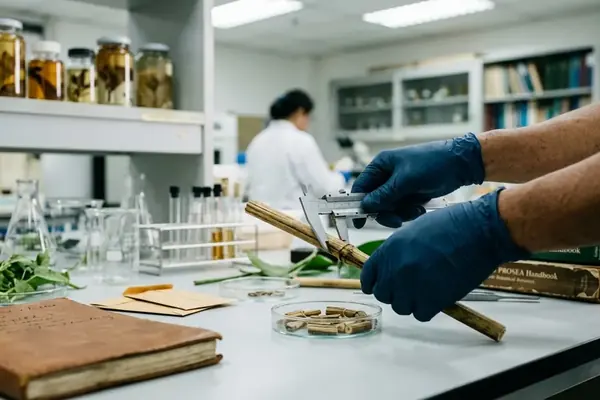
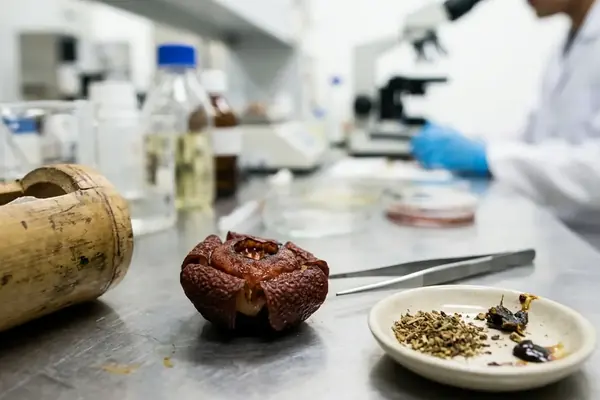
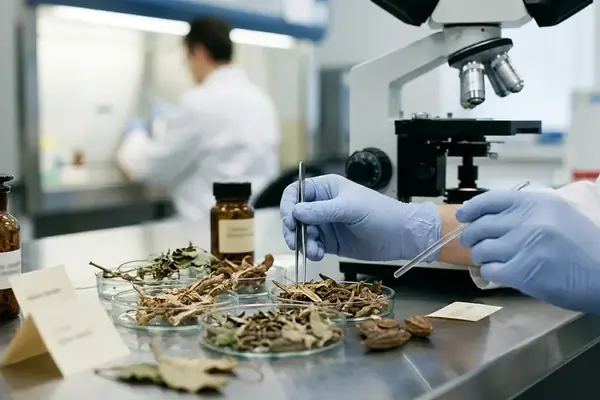
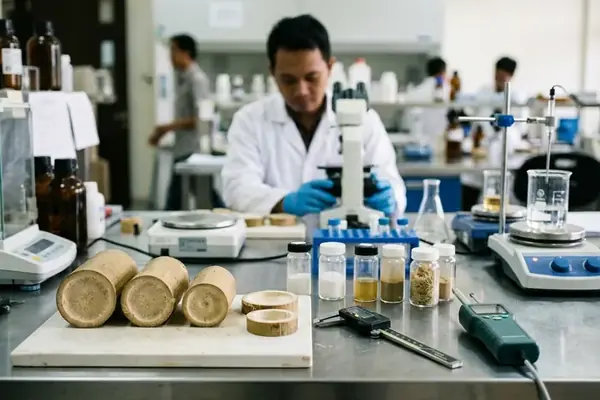
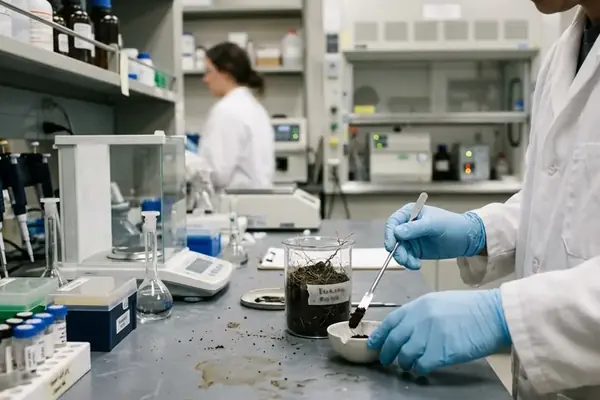
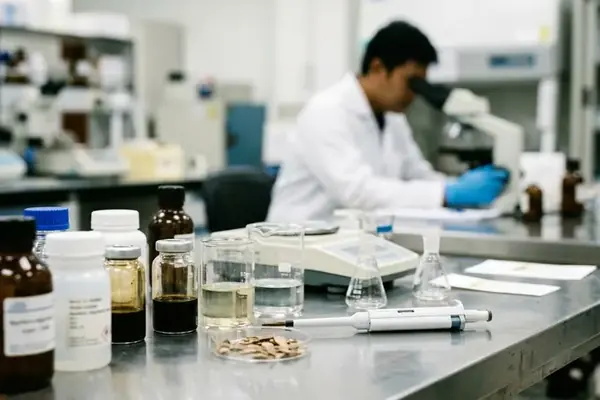
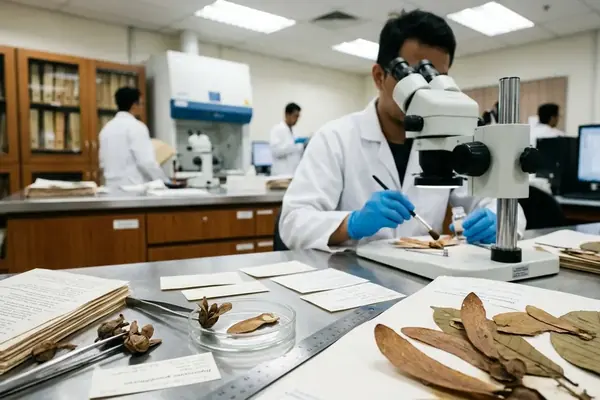
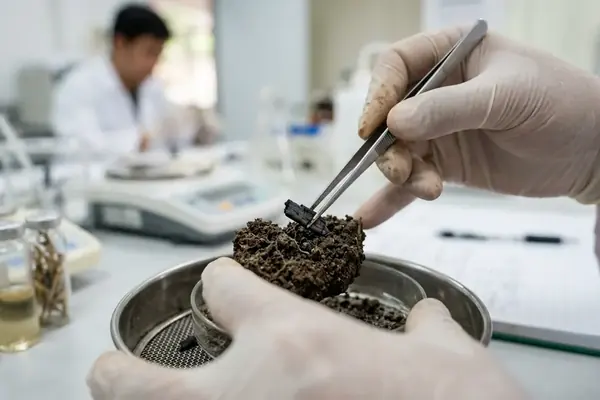
Protecting regional flora is not a desk exercise. It begins with names, vouchers, labels, living plants, and the uncomfortable recognition that a correct identification does not keep a forest fragment standing. The most useful conservation tactics in South-East Asia now combine classical herbarium discipline with active propagation, seed storage, and monitored return to the field.
The Urgency of Botanical Preservation in South-East Asia
From herbarium record to conservation decision
South-East Asia holds a concentration of vascular plant diversity that is difficult to curate and harder to protect. In practice, the first warning often appears in a cabinet before it appears in a policy paper: a species represented by older Bogor material, a narrow locality note, and no recent duplicate from the same habitat.
The Indonesian Institute of Sciences, known historically as LIPI, carried a central mandate in Bogor for taxonomy, collections, and regional botanical documentation. Those records still matter. They give curators a baseline for where a plant was collected, how it was identified, and which habitats were once botanically productive.
The shift in working method
The older workflow treated taxonomy as the foundation and conservation as a downstream use. That sequence no longer holds in every case.
Prioritized historical LIPI records from Bogor helped frame a practical shift toward interventionist methods, especially where collection gaps suggested that known populations had not been recently confirmed. A sheet in the herbarium can point to a ridge, a swamp margin, or a lowland forest remnant. The next step is no longer only to revise the name; it is to decide whether seed, tissue, or living material must be secured before the habitat changes again.
Critical Insight: A voucher-backed name is the start of conservation action, not its finish. Without habitat evidence and living backup, taxonomic certainty can become a well-labelled record of loss.
The Challenge: Habitat Fragmentation and Endemic Flora Loss
What the mapped evidence shows
Habitat surveys conducted across recent multi-year intervals were paired with mapped urbanization patterns and known Dipterocarpaceae distributions to identify priority zones. The point was not to produce a decorative map. It was to ask where botanical risk and land-use pressure met closely enough to require action.
Lowland and hill forest species are especially exposed when agricultural expansion, road access, and settlement edges divide formerly continuous habitat. Once a forest block is reduced to patches, pollination, seed dispersal, and recruitment may all continue in a visible but weakened form. A curator visiting such a site may still find seedlings, but the age structure can tell a less comfortable story.
Why endemic groups require earlier backup
Endemic Dipterocarpaceae and Orchidaceae taxa carry different risks. Dipterocarps may depend on irregular reproductive events and site-specific seedling establishment. Orchids may depend on fine-scale fungal associations, host trees, or shaded microsites that do not survive rough clearing.
The open question is blunt: how much time remains between detecting population stress and losing enough genetic diversity to make recovery shallow? Field protection remains essential, but traditional in-situ conservation has bottlenecks when land tenure, fire, drainage, or edge exposure cannot be controlled quickly.
Risk Factor: In-situ protection can look adequate on paper while the reproductive system of a plant population is already thinning out in the field.
Solution Phase I: Integrated Ex-Situ Conservation Frameworks
Working hypothesis and collection design
The working hypothesis is simple: ex-situ collections perform best when they mirror the ecological logic of the source habitat and carry precise taxonomic documentation. A living collection should not be a decorative row of rare plants. It should preserve identity, origin, and enough contextual information to guide later propagation or reintroduction.
After review of genetic tracking needs, living collections were selected as the first conservation layer for taxa where seed storage alone was unlikely to answer future management questions. Beds, shade houses, and reserve plantings were organized around habitat preference, moisture regime, growth form, and known provenance. That structure helps staff catch mistakes. A plant that behaves oddly outside its expected niche raises a curatorial question before it becomes a lost accession.
Seed banking and database linkage
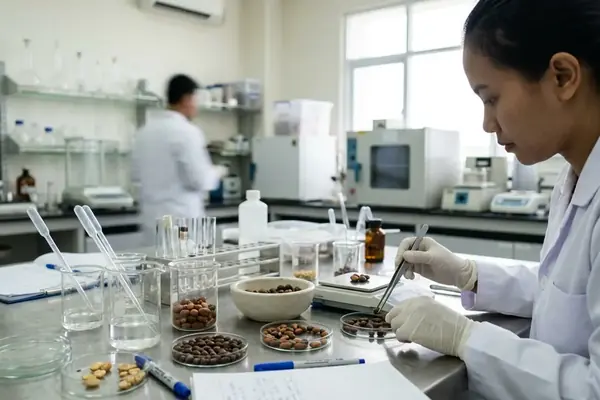
For orthodox seeds, specialized banking protocols provide a second layer. Seed banking protocols were assessed for orthodox species over storage cycles evaluated at approximately 3-7 years, with handling adjusted to identity and storage behavior rather than convenience. The important distinction is physiological, not administrative.
Database integration is the quiet part that determines whether the work remains useful. A seed lot, herbarium voucher, propagation batch, and living accession need to speak the same taxonomic language. When names change, the trail must remain readable.
- Confirm the accepted name against voucher material and diagnostic morphology.
- Record source locality, habitat, collector, and accession pathway.
- Separate orthodox seed candidates from taxa needing living or tissue-based backup.
- Link every stored lot to physical material that can be re-examined.
Recommendation: Build the tracking system before expanding the collection. Retrofitting provenance data later is slow, and the missing details are usually the ones needed most.
Solution Phase II: Advanced Propagation and Tissue Culture
When the field population cannot supply enough recruits
Some threatened species do not reproduce reliably under current field conditions. For these taxa, in-vitro propagation is not a luxury technique; it is a way to avoid waiting through reproductive cycles that may not deliver enough viable material.
In-vitro methods were adopted after assessment of low reproductive success rates in field populations. The practical sequence starts with clean source material, moves through culture establishment, multiplication, rooting where needed, and then acclimatization. Each step has its own failure points, but the most underestimated one is often the move from glass vessel to nursery bench.
Acclimatization before field return
Acclimatization trials were run under controlled humidity ranges quantified near 70-85 percent for periods logged at about 4-6 weeks. That window matters because tissue-cultured plants are often physiologically unprepared for the air movement, microbial load, and moisture swings of a nursery.
A step-by-step protocol helps technicians make the transition repeatable:
- Remove plantlets only after roots and shoots are developed enough for handling.
- Wash culture medium from roots without stripping fine tissue.
- Place plantlets in a sterile or low-pathogen substrate suited to the taxon.
- Maintain humidity within the trial range while gradually increasing ventilation.
- Hold plants in shaded nursery conditions before any field hardening.
- Record mortality, deformity, and growth response by accession, not only by species.
Cryopreservation adds a long-term storage option for selected genetic material, especially where maintaining living plants alone would expose collections to pests, storms, or staffing interruptions. It does not replace field knowledge. It protects options.
Methodological Limitations and Scope of Current Strategies
The recalcitrant seed problem
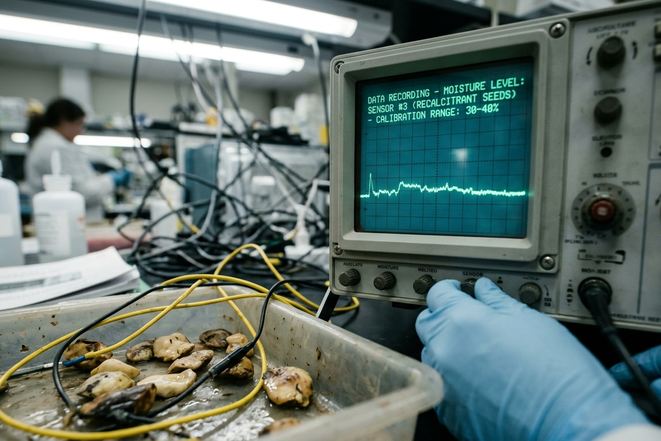
Not all seeds can be banked like temperate crop seed. Recalcitrant seeds fail in standard banking; the severity varies by species in Dipterocarpaceae. This is not a minor technical inconvenience in tropical rainforest conservation. It shapes the entire choice of method.
Storage options were reviewed against tropical seed physiology data, and the constraint remained clear: recalcitrant seed handling remains limited by desiccation thresholds. Drying such seeds to conventional storage conditions can damage viability, while maintaining them moist may shorten storage life or invite fungal problems.
Scope, representation, and climate uncertainty
Resource constraints also limit genetic representation. A collection may preserve a taxon without capturing the breadth of variation across its range. That distinction matters when reintroduction sites differ from source habitats, or when only a few accessions survive the propagation pipeline.
For tropical recalcitrant taxa, the evidence is still uneven at the species level. Climate change adds another layer of uncertainty because a historically suitable site may not remain suitable by the time plants are ready for return. Curators can reduce risk with better records and staged trials, but they cannot make future rainfall, temperature, and disturbance patterns behave like the past.
Risk Factor: Ex-situ success can create false confidence if it preserves plants without preserving enough ecological and genetic context for return.
Results: Ecological Reintroduction and Genetic Expansion
What stabilization looks like in practice
Results in this setting are best read qualitatively. Stabilization does not always mean a dramatic increase in visible plants. It may mean that targeted threatened taxa persist within botanical garden reserves, that accession identity remains traceable, and that staff can propagate material without repeatedly returning to stressed wild populations.
Pilot reintroductions were aligned with existing reserve monitoring schedules and monitored at intervals sampled at around 12-18 months post-planting. That timing gave field teams enough distance from planting shock to evaluate establishment, while still catching problems before they became invisible. The most useful notes were often plain ones: leaf burn on exposed edges, root competition near aggressive shrubs, better survival under partial canopy.
Partnerships and global targets
Institutional partnerships strengthened the work when they were tied to monitoring duties, accession exchange rules, and shared taxonomic standards. Alignment with the Global Strategy for Plant Conservation helped place local propagation and reintroduction inside a broader plant conservation framework, without replacing regional judgment.
The field lesson is modest but durable. Reintroduction works best when the receiving landscape is treated as a living system, not as an empty slot waiting for nursery stock.
Strategic Takeaways for Regional Botanical Institutions
A practical framework
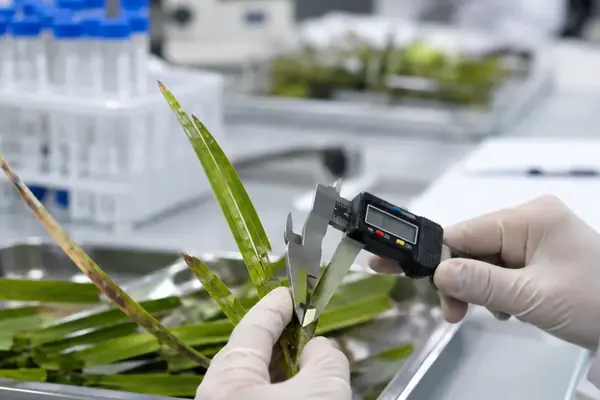
Regional botanical institutions do not need to choose between herbarium work and interventionist conservation. They need to connect them tightly. The same diagnostic characters used to confirm an herbarium sheet should guide accession control, seed lot identity, tissue culture labels, and field monitoring records.
- Anchor every action to taxonomy. Misidentified conservation material wastes years, especially in species complexes.
- Separate storage strategies by seed physiology. Orthodox seeds, recalcitrant seeds, living plants, and cryopreserved material require different handling.
- Design living collections around ecological niche. Habitat logic makes collections easier to interpret and manage.
- Track genetic and geographic coverage. A large collection with narrow provenance may still be a weak safeguard.
- Monitor reintroductions on a planned schedule. Field notes gathered too late rarely explain why plants disappeared.
Where the work should settle
The strongest approach combines living collections, advanced laboratory propagation, and rigorous voucher-backed documentation. None of these tools is sufficient alone. Together, they give curators a way to move from diagnosis to action without losing scientific accountability.
For other tropical research facilities, the adaptable part is the sequence: verify the plant, understand the habitat, choose the storage or propagation method, document the genetic trail, and test reintroduction carefully. That sequence is not glamorous. It is the kind of work that keeps a regional flora alive long enough for the next curator to improve it.
Critical Insight: Conservation tactics become durable when every living plant, seed lot, culture vessel, and field planting remains tied to a name that can be checked.