Quick Nav
- The Hidden Harvest of Paddy Ecosystems
- Eroding Botanical Knowledge and Habitat Loss
- Systematic Ethnobotanical Investigation
- Dietary Roles of Identified Wild Species
- Scope and Limitations of the Investigation
- Agricultural and Conservation Implications
- Future Research Directions
The Hidden Harvest of Paddy Ecosystems
A rice paddy is rarely just a rice paddy. To the agronomist it produces a single staple; to the household that tends it, the same flooded field and its bunds yield a quieter second harvest of leaves, shoots, and tubers that never appear in production statistics.
Across lowland South-East Asia, rice farming systems function as dual-purpose farming systems. The cultivated grain anchors the calendar, but the field margins, irrigation channels, and seasonally inundated corners host an assemblage of wild food plants (WFPs) that farming families have gathered for generations. These species filled gaps that the rice crop alone could not, particularly in the weeks before harvest when granaries ran low.
This case study documents that botanical knowledge before it thins further. The work pairs taxonomic verification with the recollections of the people who still forage these fields, treating the paddy not as a monoculture but as a managed habitat with edible depth.
Eroding Botanical Knowledge and Habitat Loss
The shift from mixed traditional farming toward intensive monoculture has narrowed what grows alongside the rice. Where farmers once tolerated a degree of botanical clutter on their bunds, uniform high-yield systems leave little room for the volunteer species that supplied wild greens.
Herbicides accelerate the loss. Field records examined for this study show broad-spectrum herbicide applications documented from 2017 onward across the surveyed districts, a practice that strips edible field-margin plants alongside the targeted weeds. The chemistry does not distinguish between a competitive grass and a leaf that a grandmother once boiled for supper.
A second erosion runs through the generations. Younger farmers can name the cultivars they plant but often cannot identify the wild herbs their parents collected, nor recall the preparation steps that render certain species safe to eat. Knowledge of which plant is edible, and how to treat it, lives in memory rather than in any written flora — and memory is not inherited automatically.
When the people who can identify a plant stop teaching the people who would eat it, the species effectively disappears from the diet long before it disappears from the field.
Systematic Ethnobotanical Investigation
The investigation was designed to hold botany and anthropology in the same frame. Field interviews ran from March through July across three districts, recording not only which plants people named but how often, in what contexts, and with what confidence.
Combining interviews with taxonomic verification
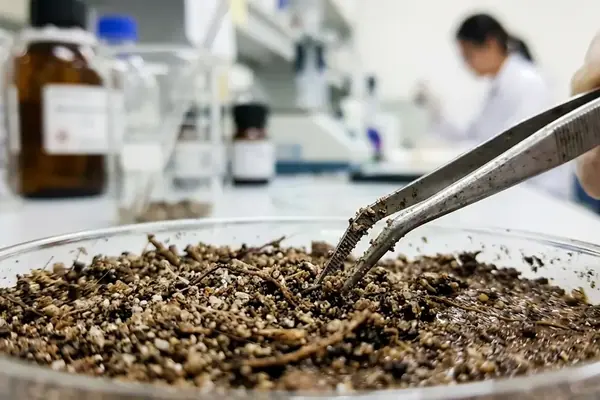
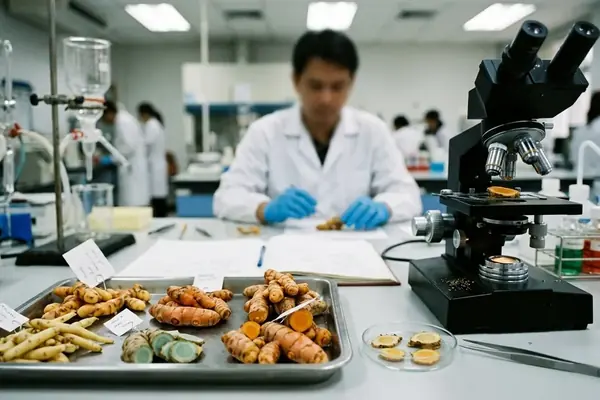
Species prioritization followed a cross-referencing procedure: interview transcripts were matched against herbarium specimens collected in parallel. The initial plan relied on published floras alone, but pilot checks set that approach aside after they revealed gaps in local usage that the literature simply did not capture. Vernacular reports kept pointing to plants the floras described incompletely or under different names.
Qualitative ethnobotanical indices
To rank species by importance rather than by mere presence, the study applied standard qualitative indices. Use Value summarized how many distinct uses informants attributed to each plant, while Informant Consensus measured agreement across respondents about a given species and its role. Plants that scored high on both received priority for detailed documentation.
Voucher specimen protocols
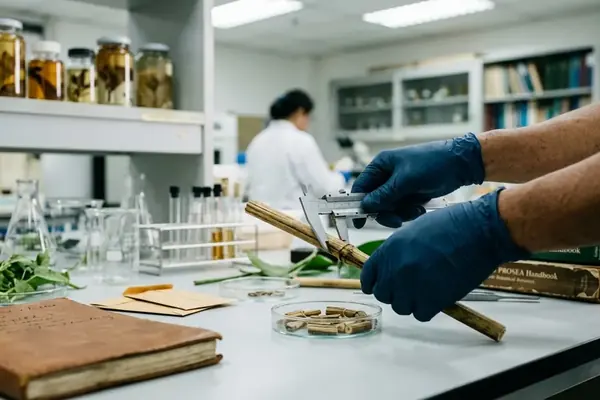
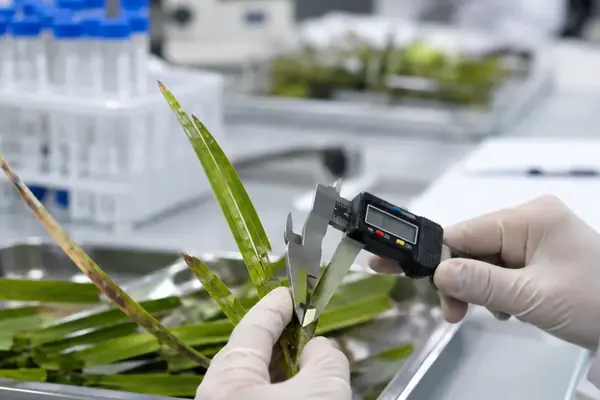
Every prioritized species was backed by a voucher specimen deposited in a regional herbarium. This anchoring step matters: a vernacular name without a verified specimen is a claim, not a record. Voucher-linked documentation lets later researchers re-examine the identification rather than trust a transcript alone.
For broader context on documenting and assessing edible wild species, the Food and Agriculture Organization (FAO) guidelines on wild edible plants offer a useful methodological reference.
Dietary Roles of Identified Wild Species
The documented plants fell into three broad habitat categories. Aquatic herbs occupied the flooded paddy interior and irrigation channels. Field-margin shrubs grew along the raised bunds where standing water receded. Climbing vines used fences, scrub, and field edges as support.
Buffering the lean season
The clearest dietary signal concerned timing. Lean-season observations recorded between 2019 and 2022 showed that several of these species were gathered most intensively in the weeks preceding the primary rice harvest, when household grain stores ran thin. These plants functioned as a nutritional buffer, supplying greens and starch precisely when the cultivated crop offered nothing yet.
Preparation and the neutralization of toxins
Not every edible species is edible raw. Several required specific traditional preparation methods to neutralize natural toxins, typically repeated boiling with discarded water, soaking, or fermentation. These steps are not decorative; they are the difference between food and poisoning. The knowledge of how long to boil and how many times to change the water is as much a part of the species' documentation as its scientific name.
The pairing of habitat, season, and preparation produced a picture of WFPs not as famine fallback but as a structured, predictable component of the agricultural year.
Scope and Limitations of the Investigation
The findings carry clear boundaries. They pertain only to lowland agro-ecological zones receiving more than 1500 mm of annual rainfall, and they should not be extrapolated to drier uplands where both the flora and the foraging practices differ.
Seasonal bias is a real constraint. Because interviews concentrated in the wet months, the survey likely underrepresents dry-season foraging, when a different set of plants becomes available and the gathering calendar shifts. A full annual cycle would almost certainly extend the species list.
Naming introduced its own difficulty. Vernacular plant names varied across local dialects, and a single species sometimes carried several names while one name occasionally covered more than one plant. The voucher protocol mitigated this, but standardization across villages remained imperfect. The documented preparation methods, similarly, reflect the surveyed communities and overlook inter-village variation in technique.
Agricultural and Conservation Implications
The central tension is practical: weed management and edible-plant preservation pull in opposite directions. A farmer needs to control competition, yet the same management can erase a valued food source. Selective rather than broad-spectrum control offers one path, sparing identified edible species on margins where they do not threaten yield.
Integration into managed systems
Some documented species are strong candidates for deliberate inclusion in agroforestry or permaculture plantings. Rather than tolerating them as volunteers, growers could site valued WFPs intentionally along bunds and channel edges, turning incidental harvest into planned production.
Policy framing
Recognizing paddy fields as managed biodiverse ecosystems, not strict monocultures, would change how they are valued and regulated. Policy that accounts for the edible and ecological roles of field-margin flora can support both food security and biodiversity without sacrificing rice output.
Interpretive point: The wild plants of the paddy are not weeds tolerated by accident. They are an embedded layer of the food system, and managing them as such requires treating the field as habitat rather than as a single-product factory.
Field recommendation: Where herbicide use is unavoidable, document the edible field-margin species present before application. A voucher-backed inventory preserves the record even when the living population is lost.
Future Research Directions
Wild food plants remain a real, if quiet, contributor to rural food security in rice farming systems. They buffer the lean season, diversify the diet, and carry preparation knowledge that cannot be reconstructed once forgotten.

The documentation here is partial by design — bounded to wet-season, high-rainfall lowland zones, and necessarily silent on practices it did not observe. Expanded ethnobotanical databases across more diverse agricultural settings are the obvious next step, ideally spanning full annual cycles and multiple dialect communities so that vernacular and taxonomic records align more tightly.
Practical constraint: This case study's preparation guidance fails in areas with recent herbicide application history, where surviving plant populations may differ from those the informants described. Treat any edibility claim as conditional on local verification.
The harvest hidden in the paddy is documentable. Whether it survives depends on recording it before the last forager who knows its name stops walking the bunds.