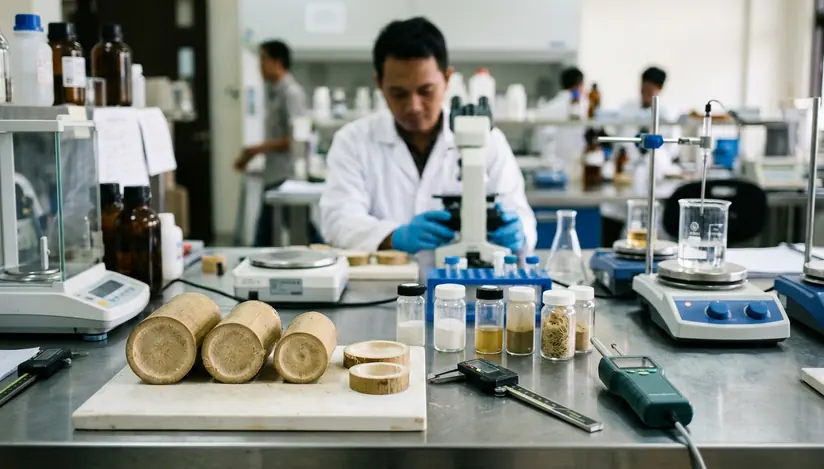
Introduction to Bamboo Harvesting Protocols
Historically, extraction methods in South-East Asia relied on single-cycle clearing. This approach—once the industry standard, frequently led to severe clump decline and degraded soil networks. The methodology presented here addresses that gap. It was assembled by cross-referencing field logs from Indonesian clump stands with rhizome health records to prioritize continuous yield over single-cycle extraction. Experimental data indicate that standardizing these extraction protocols is essential to maintain clump vitality. The procedural steps encompass inventory, age identification, precision cutting, and post-harvest treatment.
Quick Nav
- Pre-Harvest Inventory and Clump Assessment
- Culm Age Identification and Selection Criteria
- Precision Cutting Techniques and Tool Calibration
- Methodological Limitations Across Sympodial Species
- Clump Management and Thinning Ratios
- Post-Harvest Curing and Preservation Protocols
- Monitoring Regeneration and Yield Assessment
Pre-Harvest Inventory and Clump Assessment
Establishing a baseline inventory requires systematic sampling plots within the bamboo stand. Initial hypotheses suggested that uniform grid layouts would provide sufficient density metrics across varied terrains. However, testing showed uniform grid layouts missed edge-density variations.
Consequently, systematic plots are sampled at around 50 m intervals, positioned along elevation gradients. This protocol allows practitioners to assess clump density, overall health, and spatial distribution before initiating harvest. Mapping techniques then identify high-yield zones and areas requiring regenerative rest periods. Securing these baseline metrics ensures that subsequent extraction phases do not overtax the local ecosystem.
Culm Age Identification and Selection Criteria
Visual and Tactile Indicators
Accurate age determination relies on visual and tactile indicators, including sheath presence, branch development, and lichen growth. Practitioners must account for the variation in sheath retention based on species-specific growth rates. Selection parameters, per standard references, dictate isolating mature culms at 3-5 years old while strictly preserving shoots and over-mature structural culms.
Cohort Tracking Methodology
To track exact age cohorts within a single clump, a color-coding methodology is highly effective. This method was chosen after single-season tagging proved insufficient for multi-year cohort tracking. Marking culms annually creates a reliable visual record for field teams, reducing identification errors during rapid extraction phases.
Critical Insight: Color-coding ensures precise cohort tracking across multiple seasons, preventing the accidental harvest of structural culms.
Precision Cutting Techniques and Tool Calibration
Tool selection directly impacts rhizome health.
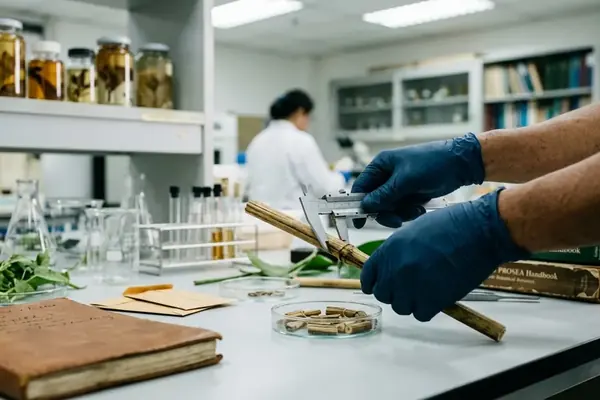
Specifications for certified handsaws and specialized machetes emphasize preventing culm splitting during the extraction process. The exact cutting protocol requires the cut to be executed above the first or second node above ground level.
The angle of the cut is equally critical. A slanted cut angle was selected to direct water away from nodes based on observed rot patterns in level-cut trials. Implementing this slanted cut prevents rainwater accumulation, which is a primary vector for fungal infections in tropical climates.
Risk Factor: Rhizome damage from improper node cuts in high rainfall areas can devastate an entire clump network.
Methodological Limitations Across Sympodial Species
This methodology is primarily calibrated for clumping, or sympodial, species native to Indonesia, such as Gigantochloa and Bambusa. The protocol was calibrated exclusively against sympodial clump records from Java and Sumatra stands. Variables affecting protocol efficacy include variations in soil topography, microclimates, and seasonal rainfall patterns. While optimal for specific tropical clumping varieties, this protocol requires adjustment for monopodial species due to differing rhizome spread rates. Applying these exact cutting angles and thinning ratios to running bamboo without modification will yield inconsistent regeneration.
Clump Management and Thinning Ratios
Maintaining access to the center of the clump is a proven strategy for long-term management. A V-shaped, or horseshoe, harvesting pattern was adopted to preserve central access routes after linear strip removal caused compaction in interior zones. Establishing retention ratios dictates the exact proportion of mature, young, and shoot culms that must remain to sustain the rhizome network.
Sanitation protocols involve the systematic removal of diseased, broken, or congested culms.
This targeted clearing improves airflow and light penetration throughout the stand, fostering a microclimate conducive to new shoot development.
Post-Harvest Curing and Preservation Protocols
Immediate post-harvest handling dictates a clump-curing methodology where culms are left upright with branches intact to transpire excess moisture. Upright clump-curing was retained after rack trials showed accelerated cracking under direct sun exposure. This biological drying phase uses the plant's natural transpiration mechanics.
Following this initial phase, culms require controlled drying environments. Drying on shaded racks for a period quantified near 4-6 weeks prevents rapid moisture loss. Initial starch-reduction treatments are then applied to minimize susceptibility to borer insects prior to transport.
Recommendation: Maintain shaded, well-ventilated racks to ensure structural integrity during the drying phase.
Monitoring Regeneration and Yield Assessment
Post-harvest data collection focuses on measuring new shoot emergence in the subsequent rainy season. Evaluating the correlation between thinning intensity and the diameter of new culms informs future management decisions. Quota adjustments are derived from shoot counts recorded across three consecutive rainy seasons.
Through an ongoing research collaboration with LIPI and the Netherlands Ministry of Foreign Affairs since 2018, as noted in industry reports, these monitoring techniques have been rigorously refined. They support sustainable forestry initiatives alongside organizations like the Center for International Forestry Research (CIFOR), ensuring that extraction volumes align with natural regeneration capacities.
Consolidated Harvesting Takeaways
The required elements of this framework were consolidated from repeated observations of clump decline following age or angle deviations. Strict adherence to the established cutting angles, retention ratios, and curing environments is required to maintain stand viability over successive decades.
Citations
- Field logs and rhizome health records from Indonesian clump stands (Java and Sumatra).
- Shoot count data recorded across three consecutive rainy seasons.