Transitioning Stenochlaena palustris from Unmanaged Swamps to Cultivation
The domestication of Stenochlaena palustris emerged from a direct collision of ecological and economic forces in Southeast Asia. Sarawak peat swamps face continuous pressure from conversion and drainage, steadily shrinking the wild resource base. Simultaneously, kitchen demand for Midin has outrun what the remaining unmanaged stands can supply. Agronomic work therefore started from the unmanaged swamp as the reference system. These environments are characterized by extreme acidity and permanent wetness. Conventional agricultural crops experience total root failure under such conditions. Treating these harsh parameters as the baseline establishes the agronomic protocols required to standardize Midin production outside of its native ecosystems.
Understanding the physiological adaptations of this fern is essential for successful cultivation. The root systems of Stenochlaena palustris have evolved to function exclusively in highly organic, saturated substrates. When conventional crops are introduced to these environments, the lack of oxygen and the high concentration of hydrogen ions destroy their root meristems. Midin thrives precisely because it possesses specialized aerenchyma tissues that facilitate oxygen transport to the submerged roots. The transition from wild-foraging to controlled cultivation relies heavily on understanding peatland agriculture and crop domestication frameworks. Cultivators must replicate the exact conditions that cause other species to fail.
The shift toward commercial production requires a fundamental redesign of agricultural expectations. Instead of modifying the soil to suit the crop, the cultivation of Midin demands that the infrastructure be modified to maintain the native soil conditions. This approach prevents the degradation of the peat substrate while maximizing the biological potential of the fern. The domestication imperative is driven by the need to secure a reliable supply chain without further depleting the vulnerable wild populations. Establishing these baseline agronomic protocols provides a clear pathway for scaling production sustainably.
Bypassing Spore Culture with Rhizome Division
Initial propagation strategies assumed spore culture would provide the necessary volume for commercial scaling. Gametophyte stands failed to furnish uniform, calendar-ready transplants. The developmental timeline of spores proved too erratic for synchronized field planting, and the delicate gametophytes were highly susceptible to environmental fluctuations in the nursery. Vegetative rhizome division became the sole scaling path. This method bypasses the vulnerable gametophyte stage entirely, ensuring that the resulting plants possess the exact genetic and phenotypic traits required for commercial production.
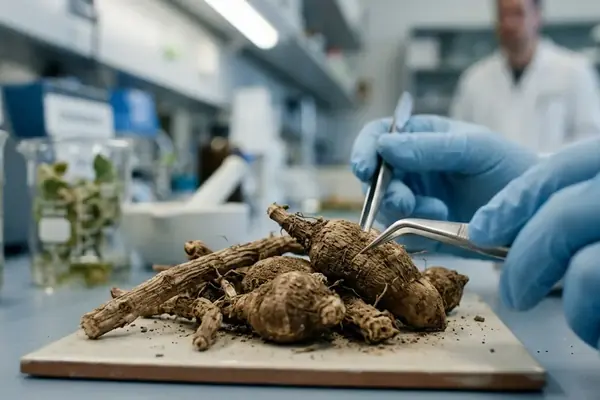
Executing this vegetative propagation requires precise physical manipulation of the plant material. Cuttings are taken directly from elongating rhizomes. Each segment must measure 10-15 cm long and bear two to three nodes. These specific dimensions ensure sufficient carbohydrate reserves for initial shoot emergence and root development. Cuttings that fall short of this length lack the energy required to establish themselves, while longer segments create unnecessary inefficiencies in nursery space utilization. The nodes serve as the critical meristematic points from which new adventitious roots and fronds will emerge.
Desiccation Prevention Protocol
Immediate Acclimatization: Workers must move the cuttings immediately into closed humidity frames to stop desiccation at the cut surfaces. Any delay between severing the rhizome and placing it in the high-humidity environment significantly reduces the survival rate.
The microclimate within the nursery dictates the success of the propagation effort. These high-humidity frames remain closed for 10-16 days before any ventilation occurs. This sealed environment maintains near-total saturation of the air, preventing the cuttings from losing moisture through transpiration before their new root systems can absorb water from the substrate. Shade is kept over the nursery for the whole establishment interval. Blocking direct solar radiation prevents thermal stress and reduces the vapor pressure deficit around the developing plants. This proven methodology ensures a high survival rate and uniform growth across the nursery cohort.
Replicating Native Hydrology and Acidity Set-Points
Replicating the native peat swamp environment requires strict management of soil chemistry and moisture retention. Hydrology and acidity targets were read directly off the native peat profile and then imposed as operational set-points. Cultivators maintain peat pH at approximately 3.2 to 4.0. Maintaining this extreme acidity is critical for the solubility of specific micronutrients that the fern requires for optimal growth. The water table is maintained 8-20 cm below the peat surface. This specific depth ensures that the lower root zone remains saturated while the upper rhizome avoids complete submergence.

Irrigation systems are tuned to keep the rhizosphere saturated while preventing a stagnant water film against the rhizome. This precise balance preserves the waterlogged habit without inducing anoxia. The movement of water through the peat profile must be continuous but slow, allowing for the exchange of gases and the flushing of metabolic byproducts. Early botanical surveys funded by the Netherlands Ministry of Foreign Affairs documented the unique economic utility of Southeast Asian flora, highlighting how deeply these species rely on their specific native soil chemistry. While these hydrological parameters reliably support vegetative growth in lowland tropical peat, high-altitude cultivation introduces thermal variables outside this model.
Mineral Soil Limitations
- Nutrient Uptake Collapse: Attempts to carry Stenochlaena palustris onto mineral soils collapse nutrient uptake.
- pH Manipulation Failure: Even after the pH is forced down and the profile is kept wet, the plants fail to thrive.
- Cation-Exchange Specificity: The feeder roots are entirely tuned to the cation-exchange capacity of organic peat.
Sarawak peat cation-exchange acts as the outer wall Midin roots will not cross onto mineral ground. The biochemical mechanisms of the fern's root epidermis are adapted to extract nutrients from highly organic matrices. Mineral soils, regardless of their moisture content or artificial acidification, possess a fundamentally different clay mineralogy that binds nutrients in ways the fern cannot access. This physiological barrier dictates that commercial cultivation must remain restricted to peat substrates, reinforcing the need for specialized agronomic practices that emulate the native swamp environment.
Managing Frond Emergence and Harvest Timing
Harvesting frequencies dictate the commercial viability of the crop. Harvest crews are restricted to gathering still-circinate or newly opened tender fronds. The timing of this intervention is critical, as the biochemical composition of the frond changes rapidly during its expansion phase. The Stenochlaena palustris crozier-to-rachis lignification break ends a Midin harvest flush while the frond is still unfurling. Once this physiological threshold is crossed, rapid lignification renders the rachises unsaleable. The deposition of complex polymers in the cell walls hardens the tissue, destroying the crisp texture that consumers demand.
Continuous cutting is kept as the primary yield method. The physical removal of young fronds releases lateral buds from apical dominance—a hormonal shift that densifies the next flush. When the dominant apical meristem is removed, auxin levels drop, signaling the dormant lateral buds along the rhizome to initiate growth. This biological response allows cultivators to increase overall biomass yield over successive growing cycles. The plant redirects its metabolic energy from expanding a single large frond into producing multiple new croziers, maximizing the harvestable volume per square meter.
Canopy Pruning Thresholds
Canopy management requires selective pruning to maintain the productivity of the stand. Old sterile fronds are pruned only when they begin to shade the developing lateral buds. These mature fronds serve as the primary photosynthetic engines for the plant, generating the carbohydrates necessary to fuel the rapid emergence of new shoots. Removing them prematurely depletes the plant's energy reserves and reduces subsequent yields. However, once they begin to obstruct light penetration to the lower canopy, their utility diminishes. Directing the plant's energy into new edible shoots guarantees a consistent harvest volume and maintains the structural integrity of the cultivation bed.
Cold Chain Implementation and Wetland Conservation
The primary barrier to export and widespread commercialization occurs immediately after the fronds are severed from the rhizome. Browning and moisture loss, rather than field biomass limitations, were judged the export ceiling. The enzymatic activity within the plant tissue accelerates rapidly upon cutting, driven by polyphenol oxidases reacting with atmospheric oxygen. This biochemical reaction degrades the visual appeal and nutritional quality of the product. The operational answer is to begin the cold chain exactly at the cutting site rather than waiting for transport to a central packing point.
Implementing this immediate temperature reduction ensures the crisp texture survives the journey to market. Field crews utilize insulated coolers and ice slurries to drop the internal temperature of the harvested fronds immediately upon collection. This rapid cooling suppresses the enzymatic activity and minimizes transpiration losses. Cultivating Midin actively prevents the drainage and oxidation of peat swamps. Peat-based beds are retained because the same undrained swamp that grows Midin is the wetland the crop is meant to keep intact. This approach aligns with LIPI: Indonesian Institute of Sciences outcomes regarding the certified sustainable utilization of endemic flora to halt wetland degradation.
The integration of commercial agriculture with ecological preservation represents a significant advancement in peatland management. By assigning direct economic value to the intact, flooded peat swamp, the cultivation of Stenochlaena palustris provides a financial incentive against destructive drainage practices. The success of this model relies entirely on strict adherence to the established agronomic and post-harvest protocols. Once severed from the rhizome, cut fronds deteriorate within hours.