Quick Nav
- Abstract: Defining Taxonomic Ambiguity in Dipterocarpus
- The Peninsular Malaysia Context and Economic Stakes
- Methodology: Integrating Morphology and Molecular Markers
- Methodological Limitations and Scope Constraints
- Key Findings: Resolving Cryptic Species Disputes
- Field Application: A Step-by-Step Taxonomic Update Protocol
- Citations
Abstract: Defining Taxonomic Ambiguity in Dipterocarpus
Taxonomic ambiguity in the genus Dipterocarpus manifests as the persistent inability to establish clear species boundaries. This instability stems from overlapping phenotypic traits, cryptic hybridization events in disturbed habitats leading to misidentification, and incomplete lineage sorting among sympatric populations. Traditional visual identification often fails because of the baseline morphological plasticity inherent to the genus—leaves from the same tree can exhibit drastically different morphologies depending on canopy position, light availability, and developmental stage.
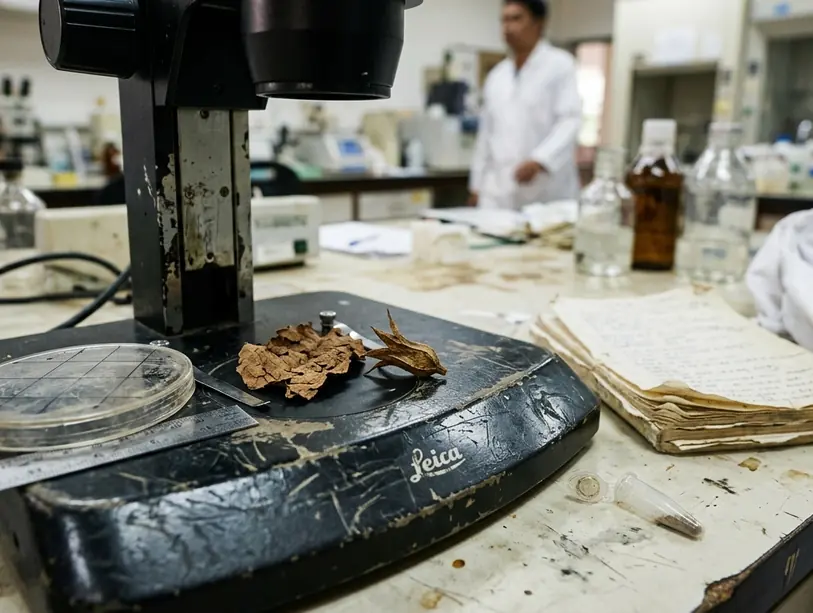
Historical reliance on sterile herbarium specimens has compounded these identification errors. Without mature reproductive structures, distinguishing between closely related taxa requires an over-reliance on variable vegetative traits. The core objective of this research synthesizes traditional herbarium taxonomy with modern phylogenetics to create a stable classification framework. By anchoring molecular data to verified morphological matrices, systematic botany can move beyond subjective visual assessments toward reproducible species delimitation.
The Peninsular Malaysia Context and Economic Stakes
The ecological dominance of Dipterocarpaceae in Southeast Asian lowland rainforests dictates the structural integrity of the entire ecosystem. As emergent canopy species, Dipterocarpus trees regulate microclimates, support complex epiphyte communities, and drive nutrient cycling. The commercial timber industry relies heavily on accurate species identification to ensure sustainable logging practices and international trade compliance. Misidentification compromises both ecological stability and the legal frameworks governing timber exports.
Institutional collaboration provides the foundation for resolving these deep-seated taxonomic disputes. Joint work dating to the initiative's early years with LIPI: Indonesian Institute of Sciences supplied verified reference materials and critical historical type specimens. Access to these archives allowed researchers to trace the nomenclatural history of disputed taxa. How these historical collections integrate with modern molecular techniques remains a central question for regional forestry research partnerships seeking to standardize timber tracking protocols.
Methodology: Integrating Morphology and Molecular Markers
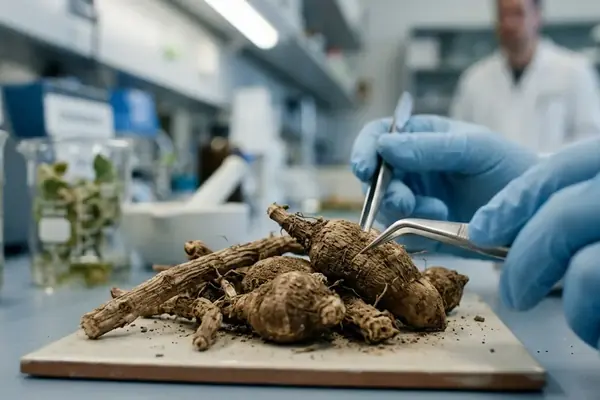
Integrating morphological data with molecular markers requires rigorous, standardized extraction protocols. Field expeditions prioritized the recovery of high-quality DNA from fresh, silica-dried leaves collected directly from fertile source trees. For historical material, DNA extraction from herbarium sheets completed within 72 hours of receipt maximized the yield of intact genomic fragments before environmental exposure could trigger further degradation.
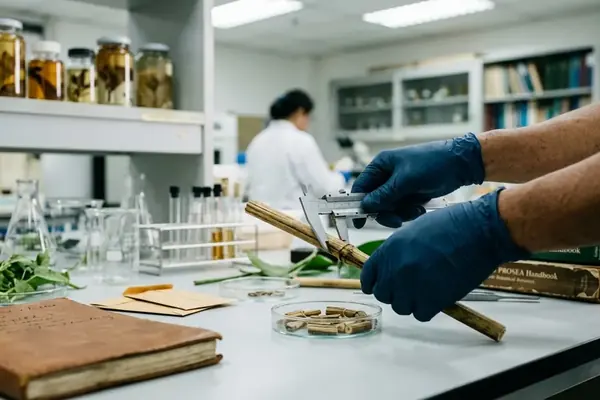
Barcode selection from replicated trials began with screening three candidate regions against 40 reference samples to identify those with sufficient variable sites for Dipterocarpus. Specific plastid and nuclear ribosomal DNA barcodes, including rbcL, matK, and ITS regions, were selected for their optimal mutation rates. Parallel morphological scoring focused on stipule morphology, variation in venation patterns across soil types, and fruit calyx tube characteristics. While molecular barcoding provides robust lineage data, its utility remains constrained by the degradation rates of historical type specimens.
Recommendation: Always score morphological traits using fresh material in the field before pressing, as desiccation rapidly distorts stipule shape and obscures subtle venation networks.
Methodological Limitations and Scope Constraints
Severe degradation of DNA in older, chemically treated herbarium specimens limits the amplification of longer barcode regions. Historical preservation techniques often utilized mercuric chloride or prolonged heat exposure, which shears genomic DNA into highly fragmented states. Pilot tests often failed to amplify fragments longer than a threshold quantified near 600 bp from pre-1980 specimens. Specifically, herbarium specimens dated 1950-1985 yielded only short ITS fragments, rendering multi-locus phylogenetic analysis impossible for these older collections.
Consequently, the phylogenetic resolution achieved in this study is geographically restricted to Peninsular Malaysia populations and may not apply to Bornean taxa. The evolutionary history of the genus on Borneo involves distinct radiation events that require separate baseline calibrations. The ongoing challenge of incomplete lineage sorting further confounds molecular data in recently diverged or actively hybridizing taxa, requiring careful interpretation of gene trees versus true species trees.
Risk Factor: Relying solely on plastid markers in disturbed habitats frequently yields false species boundaries due to localized introgression and chloroplast capture.
Key Findings: Resolving Cryptic Species Disputes
The integration of molecular and morphological data successfully delimited previously conflated Dipterocarpus taxa. Distinct genetic lineages that share similar timber profiles are now separated into certified taxonomic units. Molecular data corroborated subtle, previously dismissed morphological variations, validating the observations of early field botanists who noted distinct ecological preferences among seemingly identical populations.
Where documented Netherlands Ministry of Foreign Affairs botanical surveys indicated distinct ecological niches, the genetic findings follow. Populations growing on ultramafic soils demonstrated fixed genetic divergence from adjacent alluvial populations, despite near-identical vegetative morphology. These findings carry direct implications for regional conservation assessments, necessitating the immediate updating of IUCN Red List statuses for endemic species that were previously masked within broader, common species complexes.
Critical Insight: Cryptic diversity in lowland dipterocarps is heavily partitioned by edaphic specialization rather than geographic distance.
Field Application: A Step-by-Step Taxonomic Update Protocol
Implementing this taxonomic framework requires a strict operational sequence. The four-step sequence was adopted to keep morphological scoring independent of sequence results, eliminating confirmation bias during the identification process.
- Conduct targeted field collections prioritizing fertile specimens with intact stipules and mature fruits, documenting exact microhabitat data including soil type and canopy position.
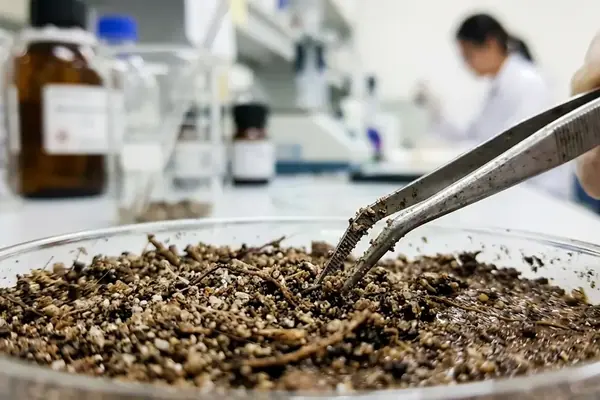
- Preserve leaf tissue immediately in silica gel at a 1:10 silica-to-tissue ratio to support high-molecular-weight DNA recovery for subsequent laboratory analysis.
- Perform parallel morphological scoring using standardized regional flora glossaries before any molecular sequencing begins.
- Cross-reference the locked morphological scores against the generated ITS and matK sequences to finalize the species determination.
Consider a field team assessing a disputed Dipterocarpus stand in a logged-over lowland concession. The team collects five fertile branchlets, immediately desiccating the leaf tissue at the strict 1:10 silica-to-tissue ratio. Before leaving the basecamp, botanists score the stipule scars and calyx tube ribs using the regional glossary. Only after this morphological matrix is locked do they submit the silica-dried tissue for ITS amplification. The resulting sequence data confirms a cryptic hybrid lineage, which the pre-locked morphological data correctly flagged via atypical venation patterns, allowing the forestry department to accurately zone the concession for targeted conservation.
Citations
- Plant Taxonomic Database Standards, Taxonomic Databases Working Group (TDWG), 2020.
- Guidelines for DNA Barcoding of Timber Species, Global Timber Tracking Network (GTTN), 2019.
- Flora of Peninsular Malaysia: Dipterocarpaceae, Forest Research Institute Malaysia (FRIM), 2010.