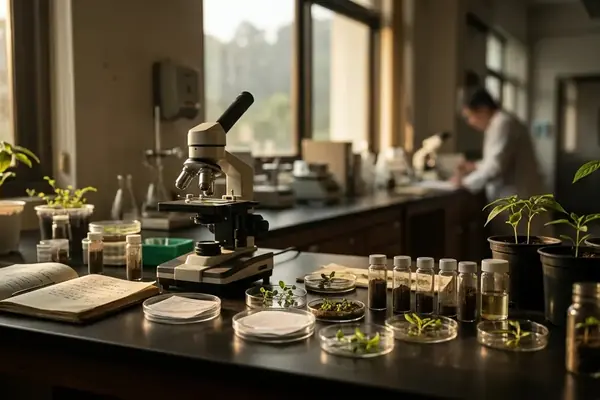
The Ecological and Cultural Stakes of Dye Plant Conservation
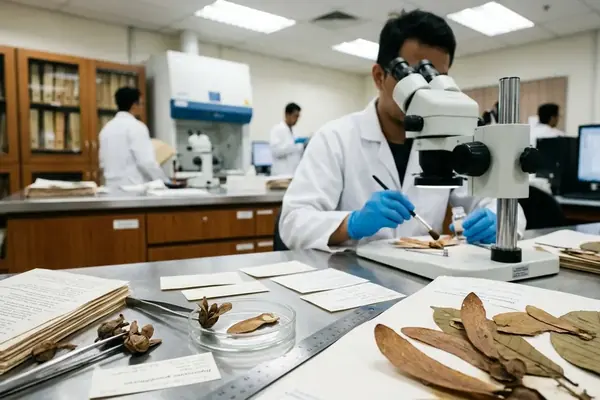
A dye plant remains culturally significant while weavers still know its name, the organ to harvest, and the sequence that fixes its colour to cloth. Once that chain breaks, a herbarium sheet can preserve the taxon, yet it cannot recover the working knowledge around the plant.
Starting With Plants Still in Use
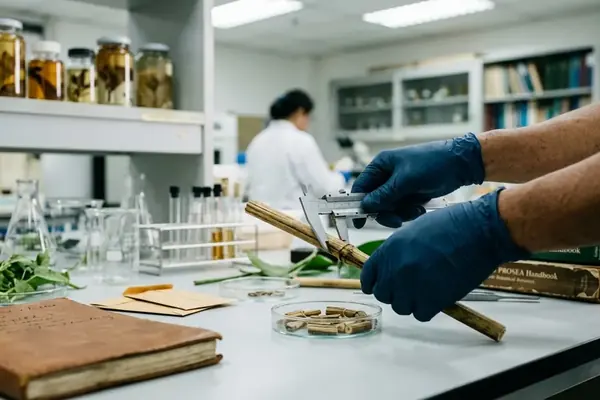
Early conservation lists for eastern Indonesian ikat were built from taxa named by practicing weavers. Those names were then matched against the dye and tannin plant treatments compiled for South-East Asia in the early 1990s. That taxonomic baseline remains useful because it gives researchers a consistent place to begin when an undocumented Lesser Sunda taxon appears in field records.
Earlier catalogues left one important matter unsettled: a correct name alone does not reveal whether a plant still carries practical or ceremonial weight. The more useful approach begins with current use and works back to taxonomy. This keeps living phytochemical knowledge attached to the genetic resource under consideration.
Conservation Before Demand Rises
Renewed interest in natural colour can place sudden pressure on wild plants. Root and bark dyes deserve particular care because collection removes tissues that a plant cannot replace as readily as leaves. A baseline gathered before wider production begins helps identify which taxa should enter cultivation and which require cautious wild harvest.
Keep Use Attached
Record the plant name together with the harvested organ, dye role, preparation sequence, and weaving context. A detached species name offers little guidance for propagation or harvest planning.
Ranking Dye Plants by Their Place in Ikat Practice
A flat vernacular list initially appears sufficient. It captures local names and can be checked against botanical specimens. In practice, that format cannot tell a propagation nursery whether to begin with a primary red source, a rarely cited fixative, or an alkaline ash adjunct.
Three Signals for Each Taxon
Cultural significance scoring separates those roles through three independent signals. The assessment proceeds step by step:
- Count citation frequency. Repeated naming across weaving accounts indicates that a taxon remains visible in practice.
- Record weaver-assigned weight. This captures the cultural standing given to the plant by the people who prepare and use it.
- Separate functional roles. Each taxon is classified by its distinct use as a colourant, mordant, or fixative.
These readings are retained separately before they are interpreted together. A primary source of red or blue consequently ranks ahead of an ash or oil adjunct when the principal question is which plant should receive propagation or ex situ attention first. The score concerns botanical priority within the documented weaving context; it does not measure the full social meaning of a textile.
From Scores to Planting Order
The value of the index appears at the decision point. If two plants occur on the same village list, their position may look equal. Citation frequency, weaver-ranked importance, and dye function reveal whether one supplies the defining colour while the other supports only a narrow stage of preparation.
The running name list was therefore set aside as a prioritisation tool. It still serves as a field record, but scored entries provide the stronger basis for ordering agricultural propagation and ex situ conservation.
How Morinda Red and Indigofera Blue Behave
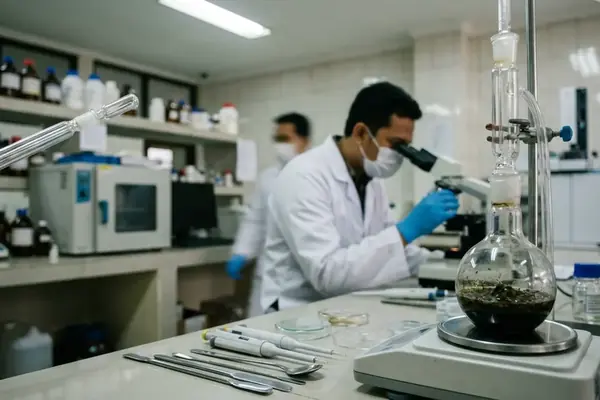
The practical readings come first. Morinda citrifolia supplies anthraquinone colourants from its root bark. Indigofera tinctoria contributes indican in its leaves, and a freshly packed alkaline vat typically requires a fermentation interval logged at about 12–36 hours for indican hydrolysis before the liquor is ready for oxidation to indigotin.
Different Pigments Require Different Handling
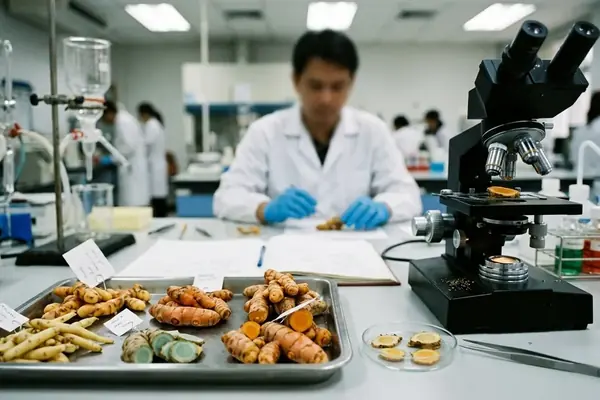
Those observations rule out a single generic extraction method. For the red-brown series, collectors and dyers must work with root bark. The fruit that dominates much non-dye discussion of M. citrifolia is not the relevant colourant source here.
Blue follows another route. Fermentation protects and transforms the leaf precursor before oxidation produces the insoluble pigment. Treating fresh Indigofera leaves like a material intended for an ordinary dye boil would ignore the chemistry that makes the vat work.
Why Regional Shade Resists Standardisation
Anthraquinone and indican yields can fall outside the microclimate and soil-alkalinity envelope found around eastern Indonesian village vats. The same named taxon may therefore give less colour or a less consistent shade when moved into different growing and processing conditions.
Commercial uniformity is an unsuitable conservation target for these Lesser Sunda chemotypes. Their botanical value includes the relationship among regional plant material, local soils, climate, and practiced preparation. Maintaining that relationship offers a more faithful goal than forcing every harvest toward an identical output.
Matching Harvest Rules to Leaves, Bark, and Roots
Sustainable collection starts with a plain question: which organ leaves the plant?
Write the Rule From the Organ Taken
Leaf harvest from Indigofera presents a different viability problem from removing root bark from Morinda. Ethnobotanical records become operational when they distinguish these plant parts and connect them to the appropriate collection sequence.
- Identify whether the dye process requires leaf, bark, or root material.
- Retain seed-bearing plants during collection.
- Follow indigenous harvest calendars already used in village agroforestry.
- Direct high-value dye taxa toward local propagation where wild offtake creates pressure.
These rules align plant biology with an existing rhythm of use. An imported closed-season calendar may overlook when a village gathers leaves, allows plants to set seed, or returns to established agroforestry plots.
Bring Priority Taxa Into Agroforestry
Scored cultural importance can guide the order of cultivation. Primary colour sources receive attention before secondary processing adjuncts, while organ-specific harvest records shape how each taxon is managed.
Leave Seed Plants
For root and bark collection, mark seed-bearing individuals before harvest begins. Their continued presence protects regeneration while other plants supply dye material.
Village agroforestry also keeps the plant close to the people who know its harvest cycle. That proximity supports observation, adjustment, and continued teaching in ways an exclusionary reserve cannot readily reproduce.
The Indigo Vat as a Living Flores Archive
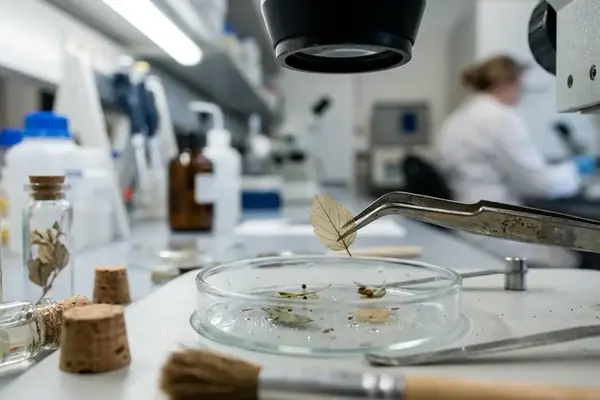
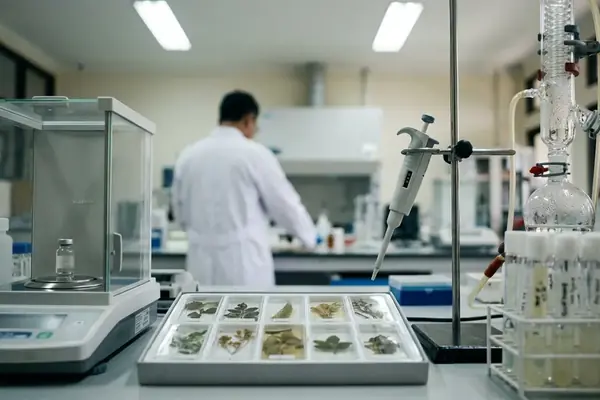
A dried voucher can document venation, leaflet arrangement, and other diagnostic features of Indigofera. The specimen cannot retain the timing and order of a fermentation vat—those details must be recorded where the dye is prepared.
Recording the Predawn Sequence
Field recording in rural Flores is timed to predawn vat charging. Harvested Indigofera leaves are layered with alkaline ash in terracotta pots, preserving a sequence calibrated through repeated use.
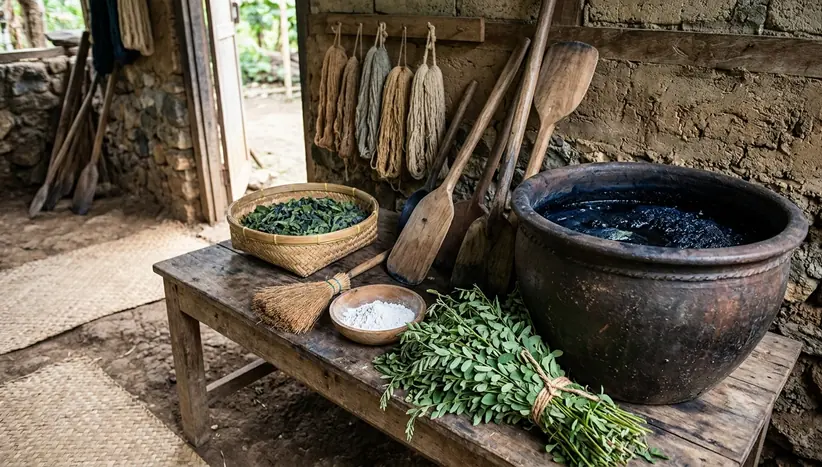
The observer needs to follow the actions in order: leaves entering the pot, ash placed between the layers, and the packed vessel beginning its fermentation interval. Each action supplies evidence that morphology alone cannot hold.
Before sunrise, a weaver crouches beside the terracotta pot and presses the final layer of leaves beneath the alkaline ash. The herbarium voucher waits nearby, labelled and dry; in the vat, the same plant has already begun its change from green leaf to blue cloth.