Introduction to Erythrina Barcoding
The genus Erythrina resists casual identification because its diagnostic characters do not always separate cleanly at the edge of a field trail, a herbarium bench, or a sequence editor.
In South-East Asia, the working problem is not simply that flowers are seasonal or that sterile collections are common. The deeper issue is that morphology, geography, and reproductive history can point in different directions. Cryptic species may share leaflet shape and thorn pattern. Hybridization can blur floral characters that otherwise carry taxonomic weight. A specimen that looks straightforward in a mature flowering tree may become ambiguous when represented by a few leaves, a clipped branch, and a locality note.
Why molecular evidence is needed
DNA barcoding does not replace taxonomy. It disciplines it. A sequence-based workflow gives the analyst an independent line of evidence when morphological boundaries are compressed by phenology, hybrid origin, or incomplete field notes.
For Erythrina, barcoding works best as a controlled comparison among named vouchers, candidate field specimens, and reference databases. The aim is not to force every sequence into a species name at first pass. The aim is to make the uncertainty visible: clean match, conflicting match, low-resolution locus, probable hybrid signal, or specimen requiring renewed morphological examination.
Critical Insight: A barcode result is taxonomic evidence, not a taxonomic decision. In this genus, sequence identity must remain tied to voucher identity, locality, and the biological plausibility of the name proposed.
Operational definition of a useful barcode
A useful Erythrina barcode protocol has three properties. It recovers DNA of sufficient purity for PCR. It amplifies loci that can be compared across leguminous taxa. It preserves enough specimen context that another worker can audit the identification later.
That last condition is often where weak projects fail quietly. A sequence without a voucher may look precise in a spreadsheet, but it cannot resolve a disputed name when the plant itself cannot be rechecked.
Field Sampling and Specimen Preservation
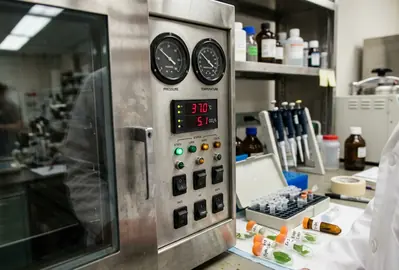
The field hypothesis is simple: young, expanding leaf tissue should produce better nuclear DNA than older, tougher foliage. The method follows from that assumption. Collect clean leaf material from a healthy shoot, avoid insect-damaged tissue, and separate molecular material from the voucher press before moisture has time to work on the cells.
Leaf tissue selection
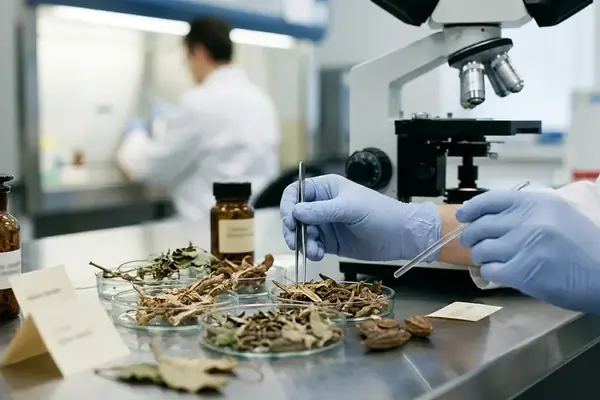
Young expanding leaves were prioritized because they tend to contain actively dividing cells and less accumulated structural and defensive material than mature foliage. In practice, this means walking past the largest leaf on the branch and taking the newer tissue that still has enough surface area for handling. The collector should remove surface water and visible debris without soaking the sample.
Small tissue packets should be labeled at the moment of collection. A later match between a silica packet and a herbarium sheet is never as secure as a label written before the next tree is sampled.
Silica desiccation timing
Desiccation should begin within 4 hours of collection, using silica gel at a minimum 8:1 gel-to-tissue ratio by weight. That ratio is not decorative. Underloaded silica holds moisture near the leaf pieces, and warm field bags accelerate degradation.
- Cut leaf material into small sections to increase drying surface area.
- Place tissue in breathable packets or tubes compatible with silica drying.
- Add enough fresh indicator silica to maintain at least the 8:1 gel-to-tissue ratio.
- Separate packets from wet voucher newspapers and humid collecting bags.
- Replace or regenerate silica when the indicator shows moisture saturation.
Voucher requirements
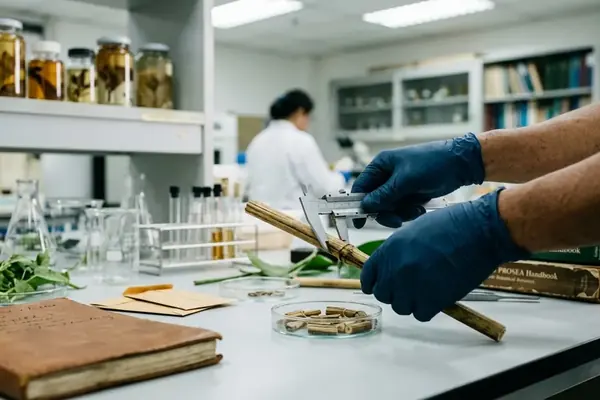
Every molecular sample needs a corresponding herbarium voucher specimen. The voucher should include leaves, flowers or fruits when available, bark or thorn notes, habitat description, collector number, date, and precise locality. For Indonesian material, older institutional pathways may reference LIPI, the Indonesian Institute of Sciences; those names should be retained in provenance notes rather than normalized away.
The method is conservative because the sequence result has no independent taxonomic standing without a specimen that can be re-examined.
DNA Extraction and Metabolite Removal
Erythrina leaf tissue can carry enough secondary chemistry to make a standard extraction look successful until PCR refuses to amplify. The problem is usually not total DNA absence. It is co-extraction.
Polyphenols and polysaccharides can persist through crude extraction and interfere with downstream enzymatic reactions. In one extraction series, commercial kits were set aside after persistent carryover made the output unsuitable for consistent amplification. The adjusted CTAB workflow gave the analyst more control over binding, washing, and inhibitor removal.
Modified CTAB approach
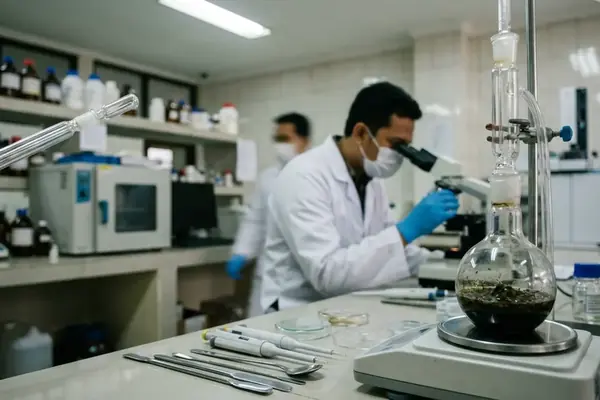
The base extraction uses CTAB, or Cetyltrimethylammonium bromide, because it handles plant cell material and polysaccharide-rich tissues more flexibly than many sealed kit workflows. For Erythrina, the modification centers on sequential additions of polyvinylpyrrolidone and beta-mercaptoethanol. PVP helps bind polyphenolic compounds; beta-mercaptoethanol reduces oxidative reactions that darken extracts and damage nucleic acids.
Residual polyphenols can still block ITS amplification despite PVP treatment. That case is worth naming because it prevents a common misreading: a failed ITS band does not automatically mean the locus is absent, the primer is wrong, or the sample was mislabeled. The extract may simply remain chemically dirty.
Risk Factor: Brown, viscous, or gelatinous extracts should not be pushed directly into PCR just to preserve schedule. They often consume reagents and produce ambiguous absence calls.
Purity threshold before PCR
Post-extraction A260/280 ratios should target the usual 1.8 to 2.0 range before PCR. This target does not guarantee amplification, but it catches many extracts that are poor candidates for expensive downstream work.
The practical sequence is extraction, purity check, visual inspection, and only then amplification. When extracts sit outside the expected purity range, repeat cleanup is usually less costly than interpreting weak bands later.
Locus Selection and PCR Amplification
The locus set should answer a taxonomic question rather than satisfy a checklist. For Erythrina, the working combination is rbcL, matK, and the ITS region because each contributes a different balance of recoverability and resolution.
Barcode loci and primer choice
rbcL is often easier to amplify and align, but it may not separate closely related species. matK can carry more useful variation, though primer fit becomes more sensitive in leguminous material. ITS can sharpen species-level comparisons, yet it is also more exposed to paralogy, fungal contamination, and hybrid histories.
Primer pairs for matK and ITS were selected after screening for consistent amplification across tested Erythrina accessions from regional herbaria. The screening step matters because primer behavior is not uniform across geography. Context-dependent variation was evident when matK primer mismatches appeared more often in Philippine than Thai Erythrina populations.
Thermocycling conditions
Per peer-reviewed methodology, the baseline thermocycler program used an initial denaturation at 94 °C for 3 minutes, followed by 35 cycles of 94 °C for 30 seconds, 52 °C for 45 seconds, and 72 °C for 60 seconds, with a final extension at 72 °C for 7 minutes.
This program gives a controlled starting point, not a universal setting. Annealing temperature may need adjustment when primer-template mismatch is suspected, especially for matK. For ITS, the first adjustment should often be extract quality rather than temperature, because inhibitor carryover can mimic primer failure.
Recommendation: Run rbcL, matK, and ITS as complementary assays. Treat single-locus success as partial evidence until the voucher, locality, and other loci have been checked together.
Sequencing and Bioinformatics Pipeline
Clean amplification is only the midpoint of the protocol. The sequence pipeline determines whether the final name rests on inspectable evidence or on an attractive but fragile database hit.
Amplicon preparation and Sanger sequencing
Amplicons should be prepared for bidirectional Sanger sequencing so that forward and reverse reads can confirm one another. Single-direction reads are tempting when budgets are tight, but ambiguous bases near primer ends and mixed signal in ITS regions become harder to judge.
During the study, bidirectional Sanger reads were assembled only after quality trimming removed ends with Phred scores below 20. That threshold keeps low-confidence terminal sequence from becoming false variation in alignments.
Assembly, editing, and contig generation
Contig generation and alignment were performed within 48-72 hours after sequencer run completion. The short turnaround kept lab notes, gel images, extraction records, and chromatogram review in the same working memory cycle. It also reduced the chance that a questionable base call would be separated from the bench observation that explained it.
The analyst should inspect chromatograms manually at positions that define species-level differences. Software consensus is useful, but it cannot know whether a double peak reflects heterozygosity, poor cleanup, mixed template, or a bad trim boundary.
Alignment and database querying
Sequences should be aligned by locus before database querying, then checked against NCBI GenBank and BOLD systems. Queries against standard plant barcode loci are most useful when the reference record has a voucher, a credible taxonomic determination, and a geographic origin consistent with the candidate specimen.
The interpretation step should record the database name, accession or process identifier when available, locus, match direction, and any conflict between loci. For Erythrina, a clean rbcL match paired with a weak or conflicting ITS result should invite review, not automatic rejection.
Methodological Limitations and Scope
The main limitation is biological rather than technical. Erythrina lineages have not always sorted neatly into barcode-ready units.
Incomplete lineage sorting
Incomplete lineage sorting can leave closely related species sharing alleles at the loci selected for routine barcoding. In that situation, a barcode may recover a clade or affinity group without resolving the accepted species boundary. The result is still useful, but only if reported with the proper level of taxonomic confidence.
This is where first-principles reasoning matters. If speciation is recent, gene trees may lag behind species trees. A single locus then describes one inherited segment, not the full organismal history.
Hybrid zones and single-locus limits
Single-locus barcoding requires parallel morphological checks when Erythrina samples originate from known hybrid zones in the Malay Peninsula. ITS may show mixed or misleading signal. Chloroplast loci may follow maternal inheritance and miss hybrid origin altogether.
For this topic, the evidence is strongest when barcode calls remain tethered to vouchers and geography. That qualifier is not a retreat from molecular methods; it is the condition under which molecular methods become taxonomically useful.
Combining evidence streams
A defensible identification integrates molecular, morphological, ecological, and geographic evidence. Leaf characters, floral morphology, elevation, habitat, associated species, and collector notes may all become relevant when the sequence result is unresolved.
The open question is not whether barcoding should be used. It is how much evidence is required before a barcode-supported name enters a biodiversity database that others will treat as an authority record.
Summary and Protocol Takeaways
A standardized Erythrina barcoding workflow begins in the field, not at the thermocycler. Poor tissue choice, delayed drying, or missing voucher context cannot be repaired by a polished alignment.
Critical steps from collection to analysis
- Per peer-reviewed methodology, collect young, healthy leaf tissue and begin silica drying within 4 hours.
- Maintain at least an 8:1 silica gel-to-tissue ratio by weight.
- Prepare a herbarium voucher for every molecular sample.
- Use modified CTAB extraction with PVP and beta-mercaptoethanol when secondary metabolites interfere.
- Proceed to PCR when A260/280 ratios target approximately 1.8 to 2.0 and the extract appears suitable.
- Amplify rbcL, matK, and ITS as complementary loci rather than isolated tests.
- Trim low-quality Sanger read ends before assembly and inspect contigs manually.
- Compare sequences against GenBank and BOLD while retaining voucher and locality context.
Contamination control
Contamination control should run through the entire workflow: clean tools in the field, separated packets, extraction blanks, PCR negatives, and careful post-PCR handling. In plant barcoding, contamination is often mundane. A reused blade, a wet packet, or an opened PCR product near setup space can create a signal that looks more biological than it is.
The best protection is routine discipline. Label before moving. Separate pre-PCR and post-PCR work. Review unexpected matches before accepting them.
Future direction
Next-generation sequencing will be useful for complex Erythrina clades where hybridization, incomplete lineage sorting, and low single-locus variation intersect. It can sample more genomic regions and expose conflict among inheritance histories. Yet the same principle holds: more sequence does not compensate for weak specimen evidence.
The protocol’s durable lesson is modest and practical. Molecular identification becomes reliable when every step, from leaf selection to database query, preserves the possibility of audit.